Large capital projects are constantly changing. Scope shifts, risks materialize, and costs evolve. The difference between control and chaos often comes down to how well change and contingency are governed.
Pathfinder recently reviewed a major utility’s change and contingency management procedure to assess its alignment with industry standards like the Association for the Advancement of Cost Engineering and the Earned Value Management System. The goal was to ensure the process supports accurate forecasting, strong governance, and real-world usability.
The foundation was solid, with a clear structure and strong intent to protect the project baseline. However, a few key improvements were identified.
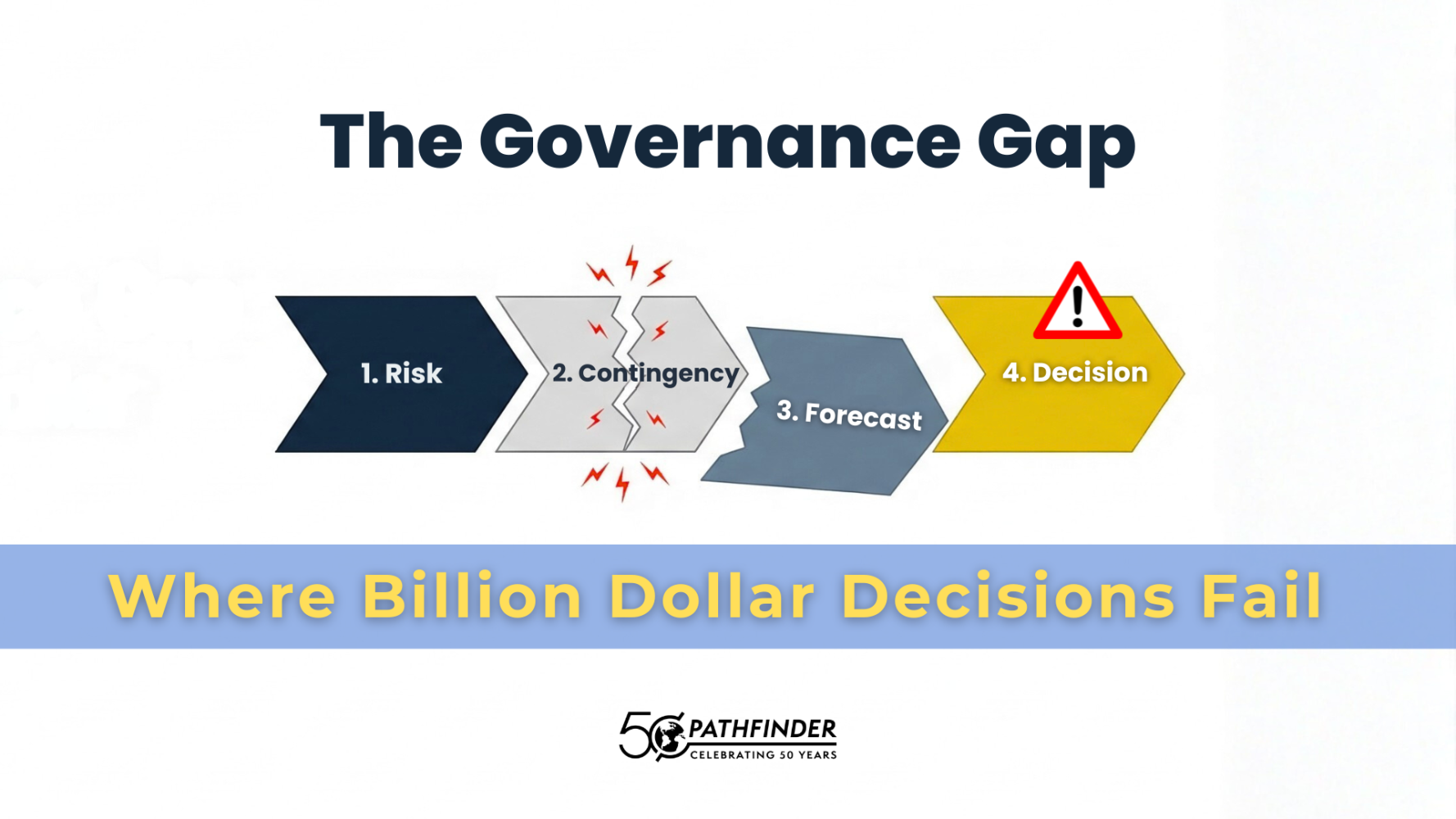
Clarifying how contingency is used is critical. When misapplied, it can hide performance issues instead of reflecting them. Strengthening approval structures can also prevent bottlenecks while maintaining oversight. Most importantly, aligning risk, contingency, and forecasting ensures project data remains accurate and trustworthy.
The takeaway is simple. Strong governance is not about adding complexity. It is about maintaining visibility into real project performance.
When done right, it gives leadership confidence in the numbers and keeps projects on track.